
Article Directory
- Introduction: Beyond Aesthetics – The Functional Yarn Revolution
- From Basic Fibers to Engineered Performance Solutions
- Strategic Imperative for Procurement & Product Development
- Defining Functional Yarns: A Spectrum of Engineered Properties
- Core Concept: Value Addition at the Fiber Stage
- Differentiation from Finished Fabric Treatments
- Comprehensive Analysis of Key Functional Yarn Advantages
- 3.1. Moisture Management & Enhanced Comfort
- Mechanism: Wicking, Quick-Drying
- Materials: Micro-denier Polyester, Specialty Nylon, TENCEL™ Lyocell
- Data Table: Moisture Vapor Transmission Rate (MVTR) Comparison
- 3.2. Thermal Regulation & Insulation
- Mechanism: Phase Change Materials (PCM), Hollow Fibers
- Materials: Outlast® (PCM), Thermolite®, Primaloft®
- Data Table: Clo Value & Thermal Retention Metrics
- 3.3. Strength & Durability Enhancement
- Mechanism: High-Tenacity Fibers, Composite Yarns
- Materials: Cordura®, Dyneema®, Kevlar® Blends
- Data Table: Tensile Strength & Abrasion Resistance (Martindale Cycles)
- 3.4. Antimicrobial & Odor Control
- Mechanism: Silver Ions, Zinc Oxide, Embedded Technology
- Materials: Polygiene®, SmartSilver®, Yarns with Treated Fibers
- Data Table: AATCC 100 Test Results (Bacterial Reduction %)
- 3.5. UV Radiation Protection
- Mechanism: UV-Absorbing Polymers, Inorganic Additives
- Materials: Sun Protective Yarns (UPF 50+ Rated)
- Data Table: UPF Ratings & Fabric Coverage Correlation
- 3.6. Elasticity & Shape Recovery (Without Spandex)
- Mechanism: Bi-component Filaments, Torsional Crimp
- Materials: T-400®, Creora® 3D, Wool/Elastane Blends
- Data Table: Growth & Recovery Percentages
- 3.7. Sustainability & Eco-Functionality
- Mechanism: Recycled Content, Biodegradable Polymers, Low-Impact Dyeing
- Materials: Repreve® (Recycled PET), PLA (Polylactic Acid), ECOTEC®
- Data Table: Carbon Footprint Reduction vs. Virgin Yarns
- 3.1. Moisture Management & Enhanced Comfort
- Sector-Specific Application & ROI Analysis
- 4.1. Performance & Sportswear: The Core Market
- 4.2. Outdoor & Technical Apparel: Extreme Conditions
- 4.3. Home Textiles & Carpets: Durability & Hygiene
- 4.4. Medical & Healthcare Textiles: Critical Function
- 4.5. Casual Wear & Fashion: Mainstream Adoption
- Procurement Considerations: Cost vs. Value Proposition
- Premium Analysis: Understanding the Markup for Performance
- Total Cost of Ownership (TCO): Longevity, Care, Customer Satisfaction
- Sourcing Checklist for Functional Yarns
- Innovation Pipeline: The Future of Functional Fibers
- Smart Yarns with Embedded Electronics
- Bio-Adaptive and Self-Cleaning Materials
- Nano-Engineered Surfaces for Multi-Functionality
- Conclusion: Investing in Functionality as a Competitive Strategy
- Frequently Asked Questions (FAQs)
What Are the Advantages of Functional Yarns? A Strategic Guide for Industry Buyers
1. Introduction: Beyond Aesthetics – The Functional Yarn Revolution
For today’s textile industry professionals, the choice of yarn is no longer just about count, color, What Are the Advantages of Functional Yarns? and cost. It’s a fundamental strategic decision that directly influences product performance, brand positioning, and consumer satisfaction. Functional yarns represent a paradigm shift—moving from passive substrates to active, engineered components. For procurement managers, product developers, and brand strategists, understanding the distinct advantages of these advanced materials is crucial for creating innovative, durable, and high-value textiles that stand out in a crowded global market.
2. Defining Functional Yarns: A Spectrum of Engineered Properties
Functional yarns are engineered at the polymer or fiber-spinning stage to possess inherent, durable properties beyond basic textile characteristics like warmth or coverage. Unlike topical fabric finishes, which can wear or wash out, functionality is built into the fiber itself. This intrinsic nature ensures longevity and consistent performance throughout the product’s lifecycle. They can be categorized by their primary benefit: physiological comfort (moisture, thermal), durability (strength, abrasion), protection (UV, microbial), and sustainability.
3. Comprehensive Analysis of Key Functional Yarn Advantages
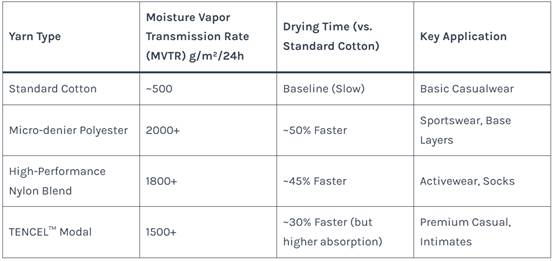
3.1. Moisture Management & Enhanced Comfort
This is the cornerstone of performance apparel. Functional yarns transport sweat (liquid moisture) away from the skin to the fabric’s outer surface for rapid evaporation.
- Mechanism: Capillary action through micro-channels in ultra-fine or engineered cross-section fibers.
- Materials: Micro-denier polyester (<1.0 dpf), proprietary nylon variants (e.g., Toray’s Moisture Wicking Nylon), TENCEL™ Lyocell with its high moisture absorption.
- Data Table: Moisture Management Performance
3.2. Thermal Regulation & Insulation
These yarns maintain a stable microclimate, either by trapping air or dynamically responding to temperature changes.
- Mechanism: Passive: Hollow-core fibers (Thermolite®) create dead air space for lightweight warmth. Active: PCMs (Outlast®) absorb, store, and release heat energy during phase transitions (solid-liquid).
- Data Table: Thermal Performance Metrics
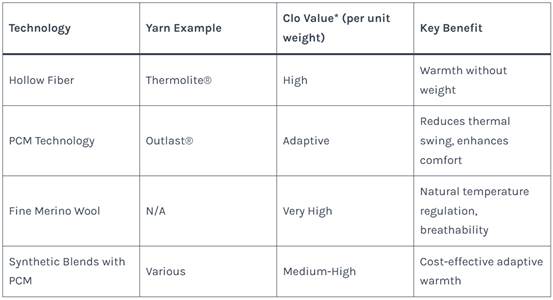
*Clo: A unit of thermal insulation.
3.3. Strength & Durability Enhancement
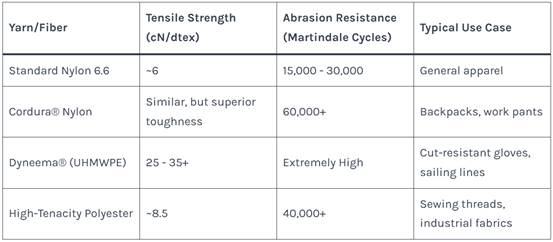
Ideal for workwear, bags, technical gear, and high-traffic carpets.
- Mechanism: Ultra-high molecular weight polymers (Dyneema®) or engineered composite yarn structures.
- Materials: Cordura® (Abrasion-resistant nylon), Dyneema®/Spectra® (UHMWPE – strongest fiber by weight), Kevlar® (Aramid for heat/flame resistance).
- Data Table: Durability Benchmarks
3.4. Antimicrobial & Odor Control
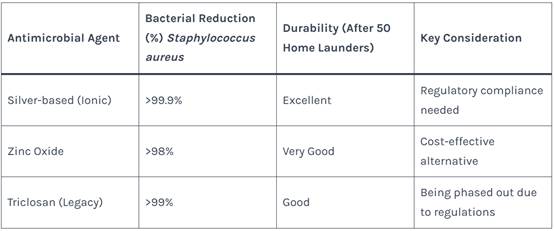
Prevents the growth of bacteria and fungi that cause odor, staining, and fabric degradation.
- Mechanism: Ionic disruption of microbial cell walls (Silver, Zinc). The additive is embedded in the polymer matrix.
- Materials: Yarns incorporating Polygiene® (Silver Salt), SmartSilver®, or proprietary masterbatch additives.
- Data Table: Efficacy Testing (AATCC 100)
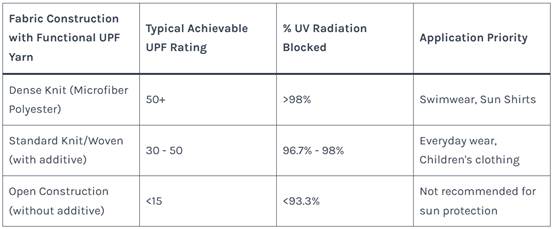
3.5. UV Radiation Protection
Provides inherent sun protection by absorbing or scattering ultraviolet radiation.
- Mechanism: TiO2 (Titanium Dioxide) or other UV-absorbing compounds are added to the polymer melt.
- Data Table: UPF (Ultraviolet Protection Factor) Guidance
3.6. Elasticity & Shape Recovery (Without Spandex)
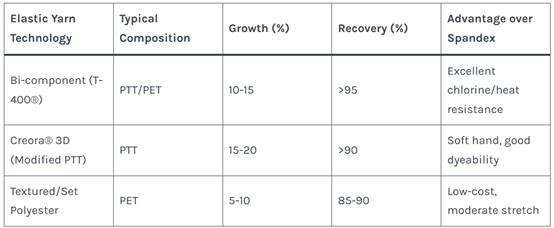
Offers freedom of movement and fit retention while avoiding the durability issues of exposed spandex.
- Mechanism: Bi-component: Side-by-side polymers with differential shrinkage create a permanent spiral crimp (e.g., T-400®). Torsional: Mechanical crimping of synthetic filaments.
- Data Table: Elastic Performance
3.7. Sustainability & Eco-Functionality
Functionality now includes reduced environmental impact, meeting both consumer demand and regulatory trends.
- Mechanism: Using recycled feedstock (post-consumer PET bottles), biodegradable polymers (PLA from corn starch), or waterless dyeing technologies.
- Data Table: Environmental Impact Comparison
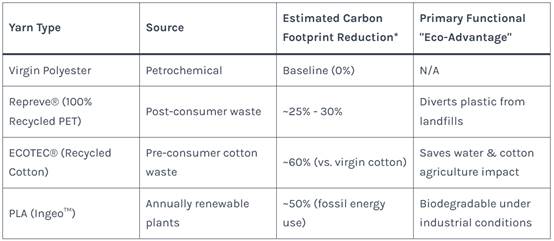
*Approximate figures vary by supplier and LCA methodology.
4. Sector-Specific Application & ROI Analysis
- Performance Sportswear: The ROI is clear: enhanced athlete comfort leads to better performance and brand loyalty. Moisture management and thermal regulation are non-negotiable.
- Outdoor Technical Apparel: Durability (abrasion/tear strength), weather protection (water-resistant yarns), and lightweight insulation are key value drivers justifying premium pricing.
- Home Textiles & Carpets: Antimicrobial yarns for hygiene in hospitality; high-tenacity yarns for carpet longevity (reducing replacement costs); stain-resistance for easy maintenance.
- Medical Textiles: Antimicrobial, fluid-repellent, and biocompatible yarns are critical for patient safety and infection control, where functionality outweighs cost concerns.
- Casual Wear & Fashion: Mainstream adoption is growing. UV protection, odor control, and sustainable credentials are becoming powerful marketing tools and points of differentiation.
5. Procurement Considerations: Cost vs. Value Proposition
Functional yarns command a premium—anywhere from 15% to 200%+ over conventional equivalents. The procurement decision must shift from unit cost to Total Cost of Ownership (TCO) and Value-In-Use:
- TCO Factors: Longer garment lifespan (durability), reduced returns (performance meets claims), enhanced brand equity (innovation leader), and compliance with regulations (sustainability).
- Sourcing Checklist: Request technical data sheets, third-party test reports (e.g., SGS, Intertek), verify durability claims (wash/wear tests), and assess supplier transparency on additive sourcing (e.g., recycled content certification).
6. Innovation Pipeline: The Future of Functional Fibers
The frontier is moving towards smart functionality: yarns with conductive metals for heating or data transmission (wearable tech), bio-sensors, and materials that change color or property in response to stimuli (temperature, light). Self-cleaning surfaces inspired by lotus leaves (nanotech) and bio-fabricated fibers with customized properties are also on the horizon.
7. Conclusion: Investing in Functionality as a Competitive Strategy
In a market saturated with look-alike products, functional yarns offer a tangible, defensible point of differentiation. They allow manufacturers to solve specific end-user problems—be it staying dry, staying safe, or reducing environmental impact. For the astute procurement manager or product developer, mastering the landscape of functional yarns is not just a technical exercise; it is a core strategic competency for driving innovation, building brand value, and achieving long-term profitability in the modern textile industry.
8. Frequently Asked Questions (FAQs)
Q1: How durable are functional properties? Do they wash out?
A1: Properties engineered into the fiber (e.g., moisture-wicking in micro-denier polyester, UV protection with embedded TiO2) are permanent and last the lifetime of the garment. Properties from topical finishes applied to yarn or fabric can diminish over washes. Always ask suppliers for test data after multiple wash cycles (e.g., AATCC 135).
Q2: Are functional yarns compatible with standard manufacturing processes (knitting, weaving, dyeing)?
A2: In most cases, yes. However, some require special handling. High-strength fibers like Dyneema® may need specialized cutters. Yarns with PCMs or high elastic recovery might be sensitive to extreme heat in dyeing or finishing. Always consult the yarn technical guide before production planning.
Q3: What is the single biggest advantage for the apparel sector?
A3: Enhanced User Comfort & Performance. Moisture management and thermal regulation directly impact wearer satisfaction, making them the most valued functions for sportswear and activewear, leading to repeat purchases and brand loyalty.
Q4: How do I verify a supplier’s claims about recycled content or antimicrobial efficacy?
A4: Request independent third-party certifications. For recycled content, look for SCS Global Services, Recycled Claim Standard (RCS), or Global Recycled Standard (GRS) certificates. For antimicrobials, ask for test reports from accredited labs following AATCC 100 or ISO 20743 standards.
Q5: Are there downsides to functional yarns?
A5: The primary downsides are cost and sometimes complexity. Some high-function yarns can be stiffer or have a different hand-feel. Certain additives (though rare in modern types) could pose sensitivities for some users. A thorough evaluation of cost versus benefit for the specific end-use is essential.
Q6: Can multiple functions be combined in one yarn?
A6: Yes, this is a growing trend known as multi-functional yarn. Examples include recycled polyester with UV protection and antimicrobial properties, or moisture-wicking nylon with odor control. The challenge is ensuring the additives and technologies are chemically compatible.
Q7: How do functional yarns impact the sustainability of a final product?
A7: It’s a dual narrative. Positive: Yarns offering durability extend product life, reducing waste. Recycled and biodegradable yarns lower environmental impact. Consideration: Some chemical additives (e.g., certain antimicrobials) can pose challenges for end-of-life recycling or biodegradation. A holistic Life Cycle Assessment (LCA) view is recommended.
Q8: What’s the best way to start incorporating functional yarns into our product line?
A8: Start with a focused pilot project. Identify one key customer pain point (e.g., odor in fitness gear, pilling in sweaters). Source 2-3 yarn options that address it. Produce a small batch, conduct rigorous in-house and user testing, and measure the market response. This mitigates risk and builds internal expertise.