
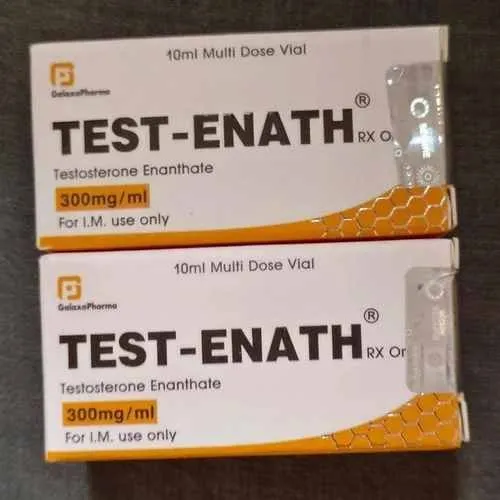
Test enanthate 300 is a term commonly used to describe a testosterone enanthate preparation associated with a concentration of 300 mg per milliliter. Testosterone enanthate is a long-acting ester of testosterone, a hormone naturally produced in the body. Although testosterone has legitimate medical applications, products marketed outside regulated healthcare systems can raise important questions about authenticity, quality, safety, and legality.
Understanding what test enanthate 300 refers to can help readers distinguish between the active ingredient, the concentration listed on a product, and the broader issues surrounding testosterone therapy. Anyone considering testosterone treatment should approach the subject through qualified medical professionals rather than relying on informal product claims or online recommendations.
What Is Testosterone Enanthate?
Testosterone enanthate is an injectable form of testosterone designed to release the hormone gradually after administration. The enanthate ester affects how quickly testosterone becomes available in the body compared with shorter-acting testosterone preparations.
In legitimate medical settings, testosterone may be prescribed for certain forms of testosterone deficiency when a clinician determines that treatment is appropriate. Medical treatment generally involves an assessment of symptoms, laboratory testing, medical history, and ongoing monitoring.
The phrase test enanthate 300 does not represent a different hormone from testosterone enanthate. Instead, it is commonly used as a product or search term referring to a particular concentration. The number 300 should therefore be interpreted as a concentration claim rather than automatically being viewed as an indicator of quality or effectiveness.
Understanding the “300” in Test Enanthate 300
Concentration is an important concept when reading pharmaceutical labels. A product described as 300 mg/mL indicates the amount of testosterone enanthate claimed to be present in each milliliter of solution. However, a concentration printed on a label does not by itself prove that the contents actually contain that amount.
This distinction becomes especially important with products obtained outside regulated pharmaceutical channels. Counterfeit, contaminated, incorrectly labeled, or improperly manufactured products may not match their packaging claims.
Consumers should therefore avoid assuming that a higher stated concentration means a better product. Quality depends on factors such as manufacturing standards, ingredient identity, sterility, accurate labeling, storage conditions, and regulatory oversight.
Why Product Quality Matters
Injectable medicines require particularly careful quality control because contamination can create serious health risks. Properly manufactured pharmaceutical products are produced under controlled conditions designed to reduce risks associated with contamination, incorrect ingredients, impurities, and inconsistent concentration.
When researching test enanthate 300 information, readers may encounter products from numerous sources. Packaging, photographs, reviews, or claims made by sellers cannot reliably establish whether an injectable product is genuine or sterile.
Regulated medicines generally provide important information such as the active ingredient, concentration, manufacturer, lot information, expiration details, and appropriate storage requirements. When this information is missing, inconsistent, or difficult to verify, it should be treated as a warning sign.
Medical Uses and Professional Evaluation
Testosterone replacement therapy can be appropriate for some individuals with medically confirmed testosterone deficiency. However, testosterone is not suitable for everyone, and having a low laboratory value does not necessarily mean treatment is automatically appropriate.
Healthcare professionals consider symptoms, repeated laboratory measurements, underlying causes, age, medical history, and other relevant factors before recommending treatment. They may also evaluate conditions that could be contributing to changes in hormone levels.
This is one reason online discussions about test enanthate 300 should not replace professional medical advice. Testosterone affects multiple biological systems, meaning treatment decisions require more than simply considering the desired hormone level.
Potential Health Considerations
Testosterone therapy can produce beneficial effects when appropriately prescribed, but it can also cause adverse effects. Possible concerns include changes in red blood cell levels, acne, fluid retention, changes in cholesterol, reduced sperm production, breast enlargement, and changes in mood or other hormone-related effects.
Testosterone can also suppress the body’s natural reproductive hormone signaling. For individuals concerned about fertility, this is an especially important consideration to discuss with a healthcare professional.
The risks and benefits vary according to individual circumstances. Age, existing health conditions, other medications, baseline hormone levels, and treatment goals can all influence the clinical picture.
The Importance of Monitoring
Medical monitoring is an essential part of legitimate testosterone therapy. Depending on the circumstances, clinicians may monitor testosterone levels and other laboratory measures while also evaluating symptoms and potential adverse effects.
Monitoring can help identify problems that may not be obvious from how someone feels. For example, changes in blood-related measurements or other laboratory values may occur without noticeable symptoms initially.
People using or considering testosterone for medical reasons should therefore discuss appropriate monitoring with their healthcare provider rather than attempting to determine safety based solely on online information.
Recognizing Unreliable Product Claims
Researching test enanthate 300 online can produce a mixture of pharmaceutical information, personal experiences, advertisements, and unverified claims. These sources should not automatically be treated as equivalent.
Statements promising guaranteed results, unusually high potency, immediate transformations, or exceptional purity should be approached cautiously. A professional-looking label or website also does not necessarily establish that a product has undergone appropriate pharmaceutical quality testing.
Reliable information is more likely to come from licensed healthcare professionals, recognized medical organizations, pharmaceutical regulators, and established medical references.
Legal and Regulatory Considerations
The legal status of testosterone varies by jurisdiction, but testosterone is generally a controlled or prescription medicine in many countries. Rules can apply to prescribing, possession, importation, distribution, and sale.
Purchasing testosterone from an unauthorized source may therefore create both health and legal concerns. Products obtained through informal channels may also lack the quality controls expected of approved medicines.
Before considering any testosterone product, individuals should understand the laws that apply in their country and use legitimate healthcare and pharmacy channels when treatment is medically indicated.
Test Enanthate 300 and Responsible Research
Responsible research begins with understanding terminology rather than assuming that a product description proves quality. The term test enanthate 300 may describe a concentration, but it does not independently confirm authenticity, sterility, manufacturing quality, or suitability for an individual.
Readers should look beyond marketing language and consider the source of the information, the regulatory status of the product, and whether claims can be supported by reliable medical evidence.
It is also useful to separate legitimate testosterone replacement therapy from non-medical use. These situations can involve very different risk profiles, goals, monitoring requirements, and legal considerations.
Questions to Discuss With a Healthcare Professional
Anyone considering testosterone treatment can prepare by asking a clinician several basic questions. These may include whether symptoms could be related to testosterone deficiency, what testing is appropriate, whether an underlying cause needs investigation, what treatment alternatives exist, and what monitoring would be required.
Patients can also ask about potential effects on fertility, cardiovascular risk factors, blood measurements, prostate health, and interactions with existing medicines or medical conditions.
These discussions provide a more reliable foundation for decision-making than choosing a testosterone product based on concentration or online popularity.
Final Thoughts
Test enanthate 300 is commonly used as a descriptive term for a testosterone enanthate preparation associated with a stated concentration of 300 mg/mL. Understanding that terminology is only the starting point. Authenticity, manufacturing standards, sterility, legal status, medical suitability, and ongoing monitoring are all important considerations.
Testosterone can have legitimate therapeutic value when prescribed for appropriate medical conditions, but it is also a powerful hormone with potential risks. Anyone researching test enanthate 300 should prioritize authoritative medical information and professional guidance, particularly when treatment or personal health decisions are involved.